
Hiring a car can open up a completely different side of a destination: quiet coastal villages, countryside stops and the freedom to travel at your own pace. But for first-time renters, the details can feel overwhelming. What does the quoted price actually include? Which insurance matters? And how do you avoid an unpleasant surprise at the collection desk?
This practical guide walks you through the decisions that matter, from choosing the right vehicle to returning it with confidence. The aim isn't to book the cheapest car at any cost. It's to book the right car, on terms you understand.

Start with your route, not the rental counter.
Before comparing vehicles, map the places you genuinely want to visit. A rental car can be ideal for rural stays, road trips and destinations with limited public transport. In a compact city with good trains and expensive parking, it may create more hassle than freedom.
Check driving distances, parking availability, toll roads, local traffic restrictions and whether your accommodation offers a space. In some cities, low-emission zones or restricted-access streets can make driving particularly complicated.
Rent for the days you need the flexibility rather than automatically for your entire holiday.

The headline daily rate is only the beginning.
Compare the total price for your exact dates, collection location and return location. Check mileage limits, fuel policy, additional-driver charges, child seats, toll equipment, airport surcharges, cross-border fees and one-way drop-off costs.
Pay attention to the vehicle category rather than expecting a specific make and model. Rental companies often advertise a representative car followed by “or similar”. Make sure the class has enough luggage space and the transmission you need.
A slightly higher upfront price may be better value when it includes the features and terms that matter to you.

Know what happens if something goes wrong.
Rental agreements may include collision damage waiver (CDW) and theft protection, but these can still leave you responsible for an excess. Some parts of the vehicle, such as tyres, glass or the underbody, may be excluded. An optional excess-reimbursement policy is different from reducing the excess directly with the rental company.
Check the amount of any security deposit, whether it is blocked on a payment card, and how long its release may take. Requirements can vary by provider and country. Never assume a debit card will be accepted simply because it worked for the online reservation.
Read the actual rental terms and policy documents before paying, and ask the provider to clarify anything unclear.
A good car rental booking is one where the price, protection and pickup rules are clear before you travel.

Give yourself ten minutes to check the details.
At collection, inspect the exterior, wheels, glass and interior. Photograph or video any existing damage and ensure it is recorded in the rental agreement. Check the fuel or charge level, mileage, warning lights and emergency contact details before leaving.
Make sure you understand local driving rules, speed limits, toll systems and where to return the car. For an out-of-hours return, follow the company's instructions and document the vehicle's condition and parking location.
Keep the final receipt and inspection records until any deposit has been released and charges are settled.
Three decisions worth making before booking
Choose a transmission you are comfortable driving. Automatic cars can be less common or more expensive in some destinations.
Compare convenience with total costs, including airport fees, transfers and parking at your accommodation.
Understand the exact fuel or charging policy and retain proof of refuelling when required by the agreement.
If you plan to drive abroad, check the destination's current licence, permit, insurance and equipment rules using official sources. Rules can vary by country, your licence and the vehicle.
Make room for the road trip you actually want.
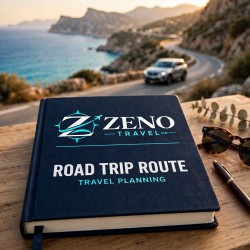
From mapping scenic stops to balancing drive times and rest breaks, Zeno Travel's road-trip planning products can help you organise the journey around your priorities. They are planning resources, not rental-car bookings or insurance policies.
Rental terms, prices, insurance cover, licence requirements and driving rules vary by provider and destination and may change. Confirm current conditions with the rental company and relevant official authorities before booking.