
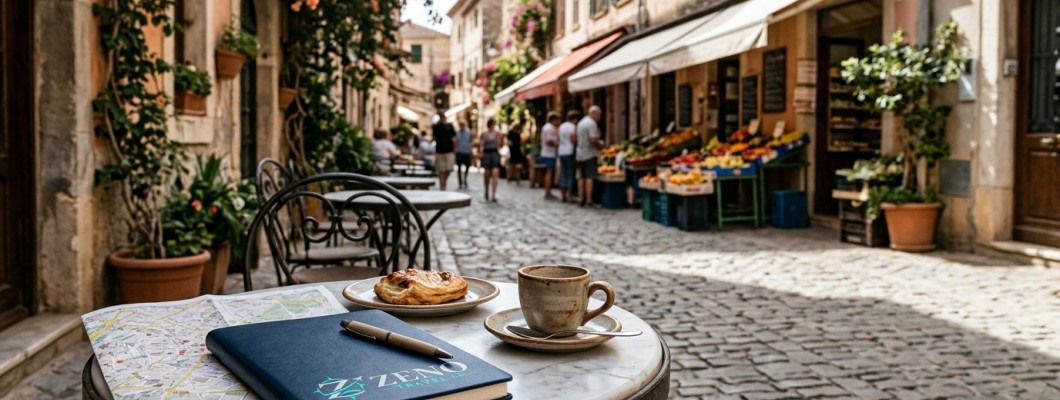
The moments you remember most are not always the famous landmarks. Sometimes they are a conversation at a neighbourhood market, a family-run café discovered by chance, or an afternoon learning a craft from someone who knows it well.
Finding authentic local experiences is less about uncovering a secret that nobody else knows and more about travelling with curiosity, respect and a little flexibility. Here is how to do it thoughtfully, without turning someone else's everyday life into a spectacle.
Explore everyday places, not just headline sights.
Look beyond the busiest attraction district. Independent bookshops, public markets, community cafés and small cultural venues often reveal how a place actually works.
Start with a neighbourhood you can comfortably explore on foot. Read local cultural listings and check whether markets or events are open to visitors. Keep some unplanned time between your major bookings so you can follow a promising recommendation.
Try this: choose one neighbourhood each day and discover it slowly rather than racing across the city for a checklist of photo stops.

Choose experiences led by people who know the place.
A guided food walk, craft workshop or neighbourhood history tour can add context that a map cannot. Look for guides who share their connection to the community, explain what is included and set clear expectations.
Read recent, detailed reviews rather than relying on star ratings alone. Check group sizes, accessibility, language, cancellation terms and whether the experience is genuinely hosted by a local practitioner.
Remember that 'local' is not a guarantee of quality or ethical practice. Ask sensible questions and favour transparent operators who respect residents and participants.

Eight useful questions to ask
- Who hosts the experience, and what is their local connection?
- What exactly is included in the advertised price?
- How large is the group, and how long does it last?
- Is the meeting point practical for your itinerary?
- Are accessibility needs and dietary requirements supported?
- What are the cancellation and weather policies?
- Does the activity respect local customs, people and wildlife?
- Do recent reviews describe meaningful, well-organised experiences?
Let food introduce you to a destination.
Food is a wonderful starting point for understanding regional traditions. Try seasonal dishes, explore independent bakeries and look for menus that reflect the area rather than a generic tourist offering.
A busy market stall or a modest family-run restaurant may be memorable, but do not assume that smaller always means better. Check opening hours, food hygiene information where available, and prices before ordering.
Learn a few polite phrases, ask about unfamiliar ingredients and be mindful of dietary restrictions. A respectful question often opens a better conversation than a rushed photograph.

The most meaningful travel experiences are often built on attention, not access.
Respect the place that makes the experience possible.
Local life is not a performance for visitors. Ask before photographing people, observe rules at places of worship and private properties, and avoid sharing the exact location of sensitive or fragile sites.
Support businesses fairly: pay the stated price, tip according to local custom and leave honest, constructive reviews. For wildlife or cultural encounters, avoid activities that pressure animals or communities to behave unnaturally.
If a neighbourhood is crowded, consider visiting outside peak hours or choosing another area. Responsible curiosity helps make travel enjoyable for residents as well as visitors.

Balance reservations with free time.
Book the experiences that genuinely need advance tickets, then protect a few open hours. Too many scheduled activities can make even a fascinating city feel like a race.
A practical day might include one pre-booked local activity, a relaxed meal and a flexible walk nearby. Keep travel time, weather and energy levels in mind, especially when travelling with children or a group.
Use local cultural calendars, trusted recommendations and recent operator information.
Choose one or two meaningful activities and verify the practical details.
Leave time for conversation, rest and discoveries you could not plan in advance.
Small moments make a richer trip.
You do not need exclusive access or a packed itinerary to experience a destination more deeply. Approach people with kindness, seek context rather than novelty, and remember that everyday places deserve the same respect as famous landmarks.
When you return home, the most valuable souvenir may be a new understanding of how other people live, cook, create and celebrate.
Make space for experiences that matter.
Our city guides, ready-made planners and personalised planning services can help you organise the essentials while leaving room for local discoveries. Review each product's description and availability before ordering.
Opening times, tour availability, prices and local guidance can change. Check current information directly with venues and experience providers before travelling or booking.